What Is Digital Healthcare? A Complete Guide for Patients

Healthcare is evolving faster than ever, and technology is driving that transformation. If you've ever wondered what is digital healthcare, you're not alone. Digital healthcare combines advanced technologies, data, and connected systems to improve patient care, streamline clinical workflows, and make healthcare services more accessible. From electronic health records (EHR) and medical imaging to AI in healthcare and remote patient monitoring, digital healthcare is reshaping how providers diagnose, treat, and manage patients.
In this guide, we'll explain what digital healthcare is, explore its key technologies, discuss its benefits, and show how organizations can improve patient outcomes through modern healthcare solutions.
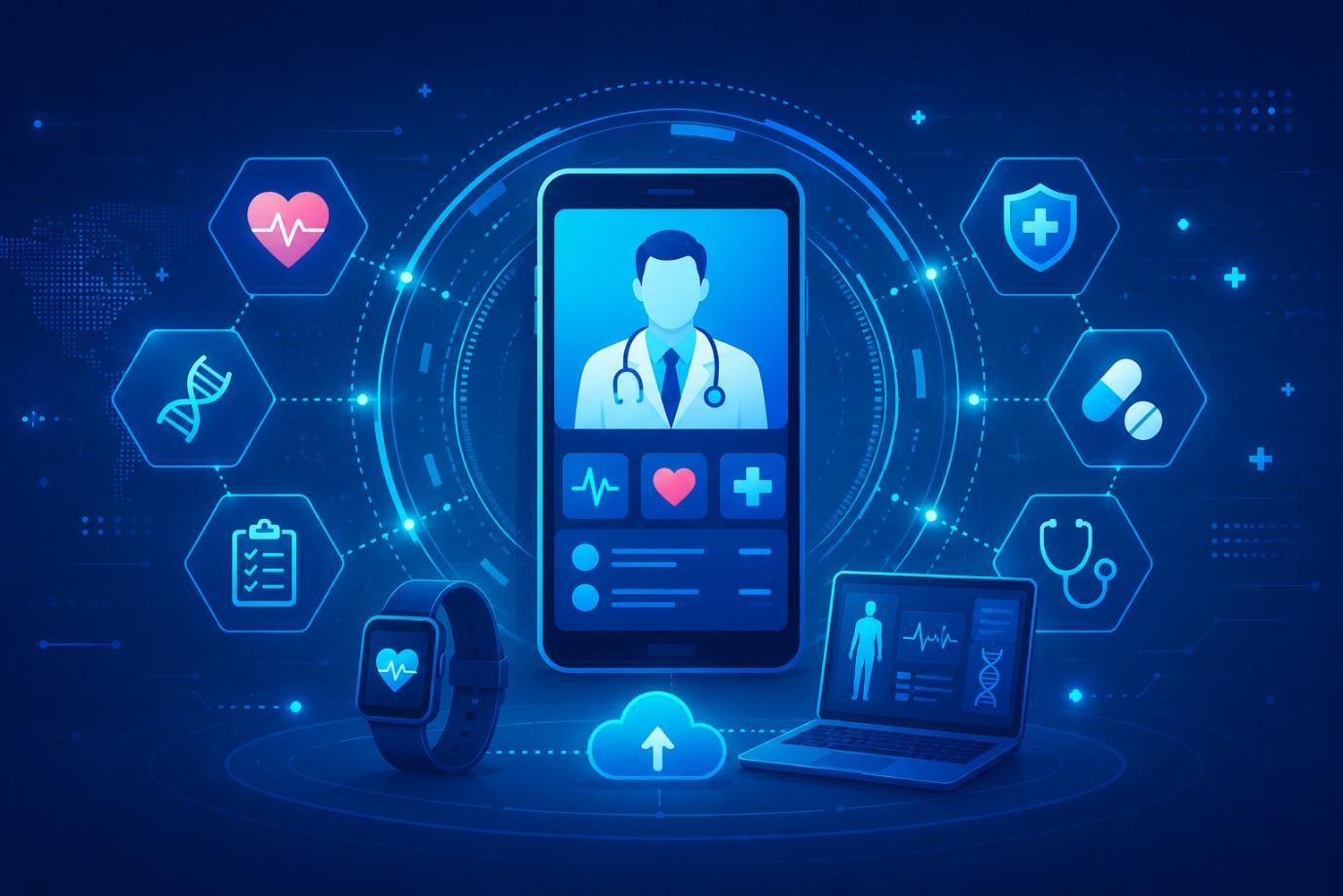
What Is Digital Healthcare?
Digital healthcare refers to the use of digital technologies to improve healthcare delivery, patient experiences, and clinical outcomes. It integrates software, connected medical devices, data analytics, and communication platforms to support healthcare providers in delivering more efficient and personalized care.
Modern digital healthcare includes technologies such as electronic health records (EHR), medical imaging, diagnostic imaging, AI in healthcare, patient monitoring, remote patient monitoring, and cloud-based healthcare platforms. Together, these innovations help healthcare organizations make informed decisions while improving operational efficiency.
Why Is Digital Healthcare Important?
The adoption of digital healthcare has transformed how healthcare providers deliver services. Traditional paper-based systems often resulted in fragmented patient information, delayed diagnoses, and inefficient workflows. Today, healthcare technology enables providers to access patient records instantly, collaborate across departments, and deliver faster, more accurate care.
Digital healthcare also supports preventive care, improves communication between providers and patients, reduces administrative workloads, and enhances overall patient satisfaction.
Key Technologies Behind Digital Healthcare
Electronic Health Records (EHR)
One of the most important components of digital healthcare is the Electronic Health Record (EHR). An EHR securely stores patient medical histories, medications, laboratory results, allergies, and treatment plans in one centralized system.
Healthcare providers can quickly access accurate patient information, reducing duplicate tests and improving clinical decision-making.
AI in Healthcare
AI in healthcare is helping clinicians detect diseases earlier, automate routine tasks, and improve diagnostic accuracy. Artificial intelligence can analyze large volumes of medical data, identify patterns, and assist physicians in making faster, evidence-based decisions.
AI is increasingly being used in medical imaging to detect abnormalities in X-rays, CT scans, and MRI images with greater precision.
Medical Imaging and Diagnostic Imaging
Medical imaging plays a vital role in modern digital healthcare. Technologies such as MRI, CT, ultrasound, and X-ray allow physicians to diagnose conditions without invasive procedures.
Diagnostic imaging systems integrated with an EHR and PACS system enable healthcare providers to securely store, retrieve, and share medical images across departments, improving collaboration and patient care.
Patient Monitoring and Remote Patient Monitoring
Patient monitoring technologies continuously track vital signs such as heart rate, blood pressure, oxygen saturation, and glucose levels.
With remote patient monitoring, healthcare providers can monitor patients outside traditional clinical settings using connected wearable devices and mobile applications. This improves chronic disease management, reduces hospital readmissions, and allows patients to receive care from the comfort of their homes.
Precision Medicine
Another important aspect of digital healthcare is precision medicine. By combining patient health records, genetic information, and advanced analytics, healthcare providers can develop personalized treatment plans tailored to each patient's unique needs.
Precision medicine improves treatment effectiveness while minimizing unnecessary interventions.
Benefits of Digital Healthcare
Implementing digital healthcare solutions offers significant advantages for healthcare organizations and patients alike.
Some key benefits include:
- Improved patient care and clinical outcomes
- Faster access to accurate patient information through EHR
- Better collaboration using integrated medical imaging and PACS systems
- Enhanced diagnostic accuracy with AI in healthcare
- Increased efficiency through automated workflows
- Better chronic disease management using remote patient monitoring
- Reduced administrative burden
- Improved patient engagement and communication
- Stronger data security and regulatory compliance
These benefits make digital healthcare an essential investment for healthcare providers seeking to improve efficiency and deliver higher-quality care.
Best Practices for Implementing Digital Healthcare
Healthcare organizations can maximize the value of digital healthcare by following these best practices:
- Implement a secure and scalable Electronic Health Record (EHR) system.
- Integrate medical imaging, diagnostic imaging, and PACS systems into a unified workflow.
- Leverage AI in healthcare to support clinical decision-making.
- Deploy remote patient monitoring solutions for continuous patient care.
- Train healthcare professionals on digital technologies and cybersecurity best practices.
- Continuously evaluate workflows to improve efficiency and patient outcomes.
By adopting these strategies, healthcare providers can accelerate digital transformation while improving operational performance.
The Future of Digital Healthcare
The future of digital healthcare is driven by innovation. Artificial intelligence, cloud computing, wearable devices, predictive analytics, and connected healthcare ecosystems will continue to transform patient care.
As healthcare organizations embrace digital technologies, they will be better equipped to deliver personalized care, improve clinical outcomes, optimize radiology workflow, and support long-term population health management.
Digital healthcare is no longer just a technological advancement—it is becoming the foundation of modern healthcare delivery.
Final Thoughts
Understanding what is digital healthcare is essential for healthcare organizations navigating today's rapidly evolving medical landscape. By combining Electronic Health Records (EHR), AI in healthcare, medical imaging, diagnostic imaging, patient monitoring, remote patient monitoring, precision medicine, and integrated PACS systems, healthcare providers can improve efficiency, enhance patient care, and make better clinical decisions.
As digital transformation continues to reshape healthcare, organizations that invest in modern healthcare technology will be well-positioned to provide safer, smarter, and more connected care for every patient.
Schedule an Appointment with Ciyex EHR
Ready to modernize your healthcare organization with advanced digital solutions? Ciyex EHR helps healthcare providers streamline clinical workflows through secure Electronic Health Records (EHR), integrated medical imaging, PACS systems, AI-powered healthcare solutions, and remote patient monitoring.
Schedule an appointment with Ciyex EHR today to discover how our innovative digital healthcare solutions can improve patient care, optimize operational efficiency, and support your organization's digital transformation.