What Makes a Modern EHR Different from Legacy Systems?

Patients expect faster service, doctors need quick access to accurate information, and healthcare organizations want systems that save time instead of creating more work. That's why many providers are moving away from older Electronic Health Record (EHR) systems and choosing modern solutions.
If you're still using a legacy EHR, you might already know some of its challenges. Slow performance, difficult updates, and limited integrations can make everyday tasks harder than they need to be.
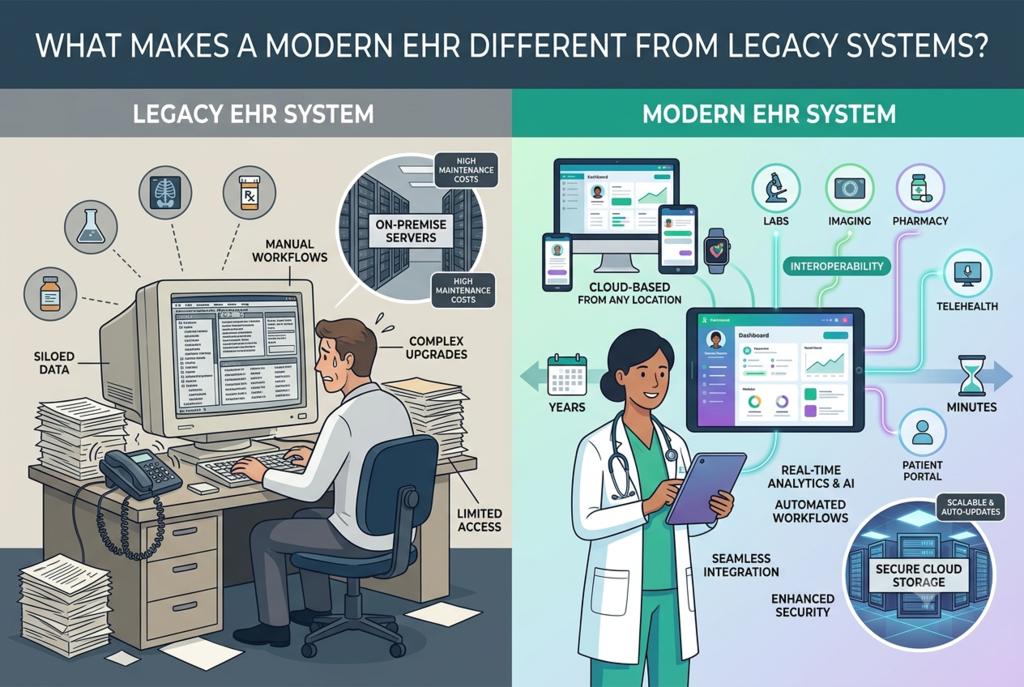
What Is a Legacy EHR System?
A legacy EHR is an older Electronic Health Record system that was designed years ago to meet the healthcare needs of that time. While these systems still store patient records and support daily operations, they often struggle to keep up with today's demands.
As healthcare technology has evolved, many legacy systems have become slower, harder to maintain, and more expensive to update. They may also lack the flexibility needed to connect with newer healthcare applications or support remote access.
What Is a Modern EHR?
A modern EHR is designed for today's connected healthcare environment. Instead of simply storing patient records, it helps healthcare providers manage appointments, prescriptions, billing, lab reports, and patient communication from one platform.
Most modern EHR systems are cloud-based, which means users can securely access information from different locations without relying on physical servers. They are also built to integrate with other healthcare tools, making it easier to share information across departments and improve overall efficiency.
1. Cloud Technology Makes Everything Easier
One of the biggest differences between modern and legacy EHR systems is where the software runs. Older systems are usually installed on local servers inside a hospital or clinic, meaning the organization is responsible for maintaining hardware, performing backups, and installing updates.
Modern EHR systems are typically cloud-based. Updates happen automatically, data is backed up securely, and authorized users can access patient records from almost anywhere with an internet connection, allowing healthcare teams to focus more on patient care instead of managing IT infrastructure.
2. Better User Experience for Healthcare Staff
Nobody enjoys working with software that feels confusing or outdated — a common complaint about many legacy EHR systems.
Modern EHR platforms are designed with healthcare professionals in mind. They offer cleaner dashboards, simpler navigation, and faster search tools, making everyday tasks much easier to complete so doctors and nurses can spend more time with their patients.
3. Faster Performance
Speed matters in healthcare. Waiting several seconds for a patient record to load may not seem like much, but those delays can add up over the course of a busy day.
Modern EHR systems use newer technologies that process information much more efficiently. Whether you're opening patient records, generating reports, or reviewing lab results, everything happens faster, helping healthcare teams work more productively.
Healthcare organizations also need more than just faster software — they need meaningful insights from their data. Modern EHRs include reporting and analytics features that help clinics monitor patient outcomes, identify workflow bottlenecks, and make better business decisions.
4. Easy Integration with Other Healthcare Systems
Healthcare organizations rarely rely on just one piece of software. They often use separate systems for laboratories, pharmacies, billing, telemedicine, and medical imaging.
Modern EHR platforms are built to connect with these tools using industry standards and APIs. This allows information to move smoothly between systems, reducing duplicate data entry and improving accuracy. Legacy systems often require custom integrations, which can be costly and difficult to maintain.
5. Better Security
Patient information is one of the most sensitive types of data any organization manages, which is why security is a top priority for modern EHR systems.
Modern platforms include features such as encrypted data, multi-factor authentication, role-based access, and regular security updates — protections that help healthcare organizations reduce security risks while meeting industry compliance requirements.
Why Healthcare Providers Are Upgrading
Healthcare organizations are moving to modern EHR systems because they want to:
- Improve patient care
- Reduce administrative work
- Increase productivity
- Strengthen data security
- Support remote healthcare
- Make better decisions using real-time data
- Prepare for future healthcare technologies
Modern EHRs help healthcare teams focus more on patients and less on managing outdated software.
Conclusion
Modern healthcare requires more than a system that simply stores patient records. Healthcare providers need an EHR that is fast, secure, easy to use, and flexible enough to grow with changing technology.
At Ciyex, we believe healthcare technology should empower providers, not slow them down. Our open-source, FHIR-native EHR platform is designed to help clinics, hospitals, and community healthcare organizations simplify their workflows while delivering better patient experiences. With modern features like interoperability, automation, analytics, and cloud-ready architecture, Ciyex gives healthcare teams the tools they need to build a more connected and efficient future.
Ready to leave your legacy system behind? Schedule an appointment with our team to see how Ciyex can help you modernize your EHR.