How Nonprofit Healthcare Technology Changes Lives

Technology has changed many parts of modern healthcare. From electronic health records to telehealth and digital health tools, technology helps providers work more efficiently and connect with patients in new ways.
But healthcare technology is not only about improving speed or reducing paperwork. It can also help communities that face barriers to quality healthcare.
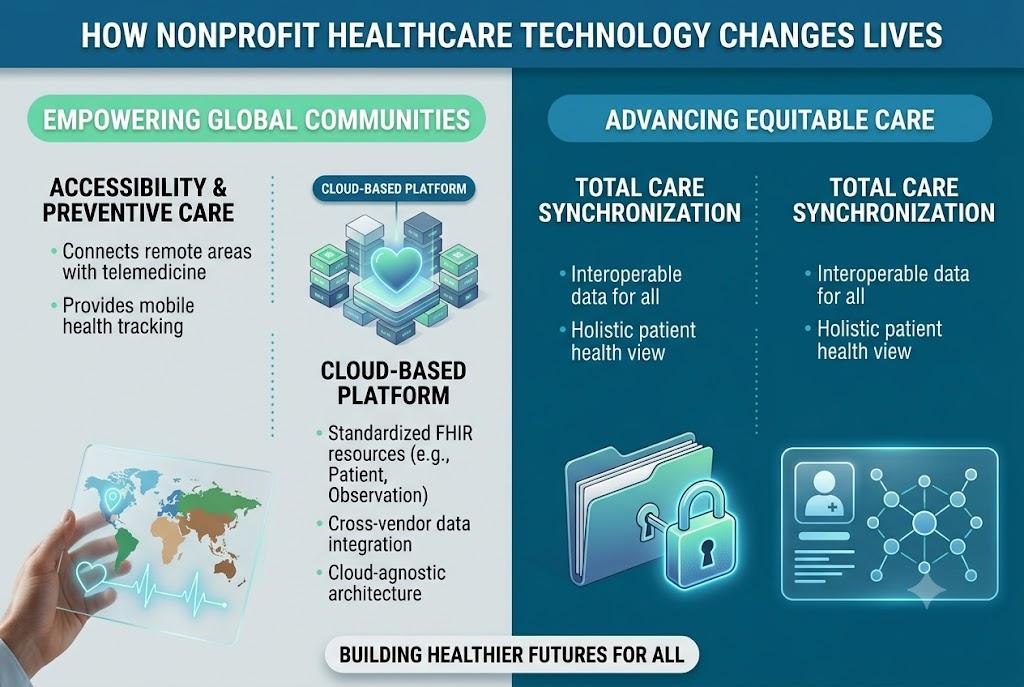
For nonprofit organizations, technology can be especially valuable. Many nonprofits work with communities that have limited access to healthcare, fewer resources, or difficulty getting the services they need. The right technology can help these organizations reach more people, improve care, and make better use of limited resources.
What Is Nonprofit Healthcare Technology?
Nonprofit healthcare technology refers to digital tools and systems used by nonprofit healthcare organizations, community clinics, charitable organizations, and other groups working to improve access to care.
These tools can include electronic health records (EHRs), telehealth platforms, patient portals, scheduling systems, data management tools, and healthcare communication platforms.
Why Technology Matters for Nonprofits
Nonprofit healthcare organizations often work with limited budgets and resources. At the same time, they may serve large numbers of patients with complex needs.
This creates a difficult balance.
Organizations need to provide quality care while keeping their operations efficient. Technology can help by reducing repetitive administrative tasks, organizing patient information, and improving communication between care teams.
Even small improvements can make a meaningful difference when an organization serves a large community.
Improving Access to Healthcare
One of the biggest ways technology can help nonprofit healthcare organizations is by improving access.
People living in rural areas or underserved communities may have difficulty traveling to healthcare facilities. Telehealth and other digital services can help connect patients with healthcare professionals without requiring every visit to happen in person.
For someone who has limited transportation or lives far from a clinic, being able to access certain healthcare services remotely can make a real difference.
Technology cannot solve every access problem, but it can remove some of the barriers that prevent people from receiving care.
Supporting Community Clinics
Community clinics often serve patients who may have limited access to traditional healthcare services.
These clinics need reliable systems to manage patient records, appointments, communication, and care coordination.
A modern EHR can help keep important information organized and accessible to authorized healthcare professionals. This allows providers to spend less time searching for information and more time focusing on patients.
For nonprofit clinics, choosing flexible technology can also be important because their needs may change as the community they serve grows.
Technology and Health Equity
Healthcare technology can play an important role in addressing health disparities.
However, simply providing technology does not automatically create better health outcomes. The technology needs to be accessible, affordable, easy to use, and designed around the needs of the people it serves.
This is why health equity should be considered when developing and adopting digital healthcare solutions.
Technology should help reduce gaps in care rather than create new ones.
For a deeper look at how technology can support health equity, read Technology as a Tool for Health Equity. It explores how digital solutions can help address barriers to care and create more equitable healthcare opportunities.
Making Better Use of Healthcare Data
Nonprofit organizations collect valuable information through their daily work.
Patient records, appointment information, health outcomes, and community data can help organizations understand the needs of the people they serve.
When this information is properly organized and protected, it can help nonprofits identify trends, improve services, and make better decisions.
For example, an organization may discover that a particular community has a higher need for a certain type of service. This information can help leaders decide where resources should be directed.
Good technology turns data into something that organizations can use to make informed decisions.
Reducing Administrative Work
Healthcare workers already have demanding jobs. Spending too much time on repetitive administrative tasks can take valuable time away from patients.
Technology can automate or simplify tasks such as scheduling, documentation, communication, and record management.
This does not mean removing people from the process. Instead, it allows healthcare teams to spend more of their time on work that requires human experience and understanding.
For nonprofit organizations with small teams, this can be especially helpful.
Connecting Healthcare Organizations
Patients often receive care from more than one organization.
A person may visit a community clinic, specialist, laboratory, hospital, or pharmacy. If these systems cannot communicate with each other, important information can become difficult to access.
Interoperable healthcare technology helps different systems exchange information securely.
This can improve care coordination and reduce the need for patients to repeatedly provide the same information.
An open-source EHR platform can also give nonprofit organizations more flexibility when building or connecting their healthcare technology. Instead of being limited to one closed ecosystem, organizations can have more options for integrations and future development.
Helping Patients Become More Involved
Technology can also give patients greater access to their own health information.
Patient portals and connected healthcare applications can help people view records, communicate with providers, manage appointments, and better understand their care.
When patients have easier access to useful information, they can become more involved in healthcare decisions.
This creates a relationship where technology supports communication between patients and providers rather than creating another barrier.
Supporting Healthcare Workers
Technology should not only benefit patients. It should also support the people delivering care.
Healthcare workers need tools that are reliable, easy to use, and designed around real clinical workflows.
A complicated system can create frustration and increase administrative work. A well-designed platform can make everyday tasks easier.
For nonprofit organizations, choosing technology that supports both patients and healthcare workers can create benefits across the entire organization.
The Importance of Flexible Technology
Nonprofit healthcare organizations do not all have the same needs.
A rural community clinic may need different tools from a nonprofit hospital or a mobile healthcare program. Their budgets, workflows, and patient populations may also be different.
This makes flexibility important.
An open-source approach can give organizations more freedom to adapt technology to their needs. It can also support integration with other applications and healthcare systems.
Challenges Nonprofits Need to Consider
Technology can create significant benefits, but nonprofits also need to consider the challenges that come with adopting new systems.
Cost, staff training, security, accessibility, technical support, and data privacy all matter.
A solution that looks useful on paper may not work well if staff cannot use it effectively or if it does not fit the organization's workflow.
Nonprofits should therefore choose technology based on the needs of their teams and communities rather than simply choosing the newest available tool.
Building a More Inclusive Healthcare Future
Technology alone cannot create health equity. Healthcare organizations, communities, policymakers, and technology providers all have a role to play.
But when technology is designed with accessibility and real community needs in mind, it can become a powerful tool for positive change.
Nonprofit healthcare organizations can use digital tools to reach more people, coordinate care, improve efficiency, and make better decisions.
The most valuable technology is not necessarily the most complicated. It is technology that solves real problems and makes healthcare easier to access and deliver.
Conclusion
Nonprofit healthcare technology has the potential to do much more than improve administrative processes. It can help communities access care, support healthcare workers, connect organizations, and give patients a greater role in their own healthcare.
For nonprofits, the right technology should be flexible, secure, accessible, and built around the needs of the communities they serve. Open and interoperable solutions can provide the flexibility needed to connect different systems and support future growth.
By helping organizations create connected healthcare workflows, Ciyex can support community clinics and healthcare providers as they work toward more accessible and coordinated care. Technology is only part of the solution, but when it is built around people and their needs, it can help turn better healthcare access into a reality.
Is your organization looking for a flexible approach to healthcare technology? Schedule an appointment with our team to explore how an interoperable EHR platform can support your goals.