Vendor Independence in Healthcare: Why It Matters More Than Ever

Healthcare organizations rely on technology for almost everything they do. From managing patient records to scheduling appointments and processing billing, software has become a vital part of daily operations.
But what happens when you're tied to a single software vendor? What if switching to a better solution becomes expensive, time-consuming, or even impossible? This is where vendor independence becomes important.
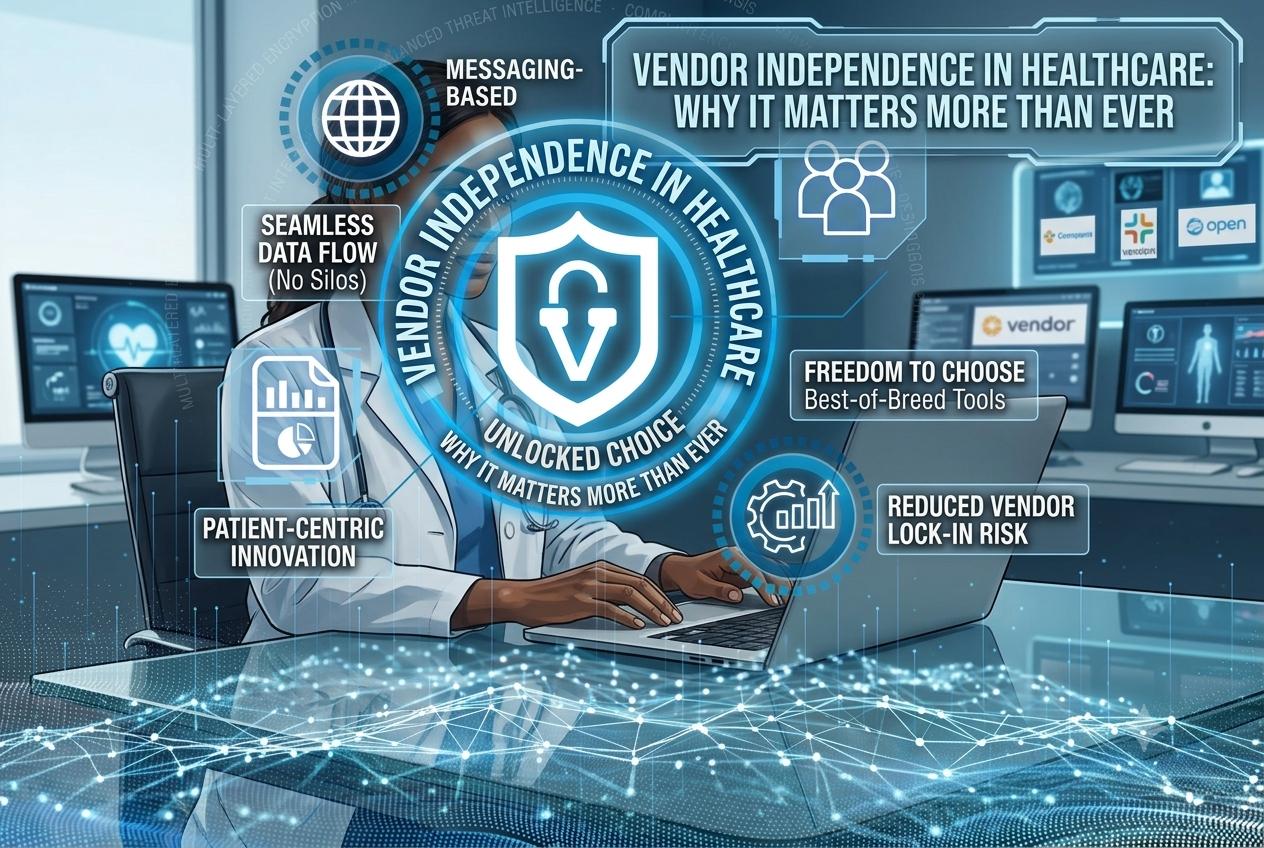
What Is Vendor Independence?
Vendor independence means that a healthcare organization is free to choose, change, or upgrade its software without relying on a single vendor.
Instead of being locked into one platform, organizations can integrate new tools, adopt better technologies, or migrate to another system whenever it makes sense for their needs. The goal is simple: your technology should support your healthcare services — not control them.
Understanding Vendor Lock-In
Many healthcare providers use software that becomes deeply connected to their daily operations. Over time, moving away from that system can become difficult because patient data, workflows, and integrations are all tied to one vendor. This situation is known as vendor lock-in.
Vendor lock-in can make even small changes expensive and risky. As a result, organizations may continue using outdated software simply because switching feels too complicated.
Why Vendor Independence Is Important
Technology changes quickly, and healthcare organizations need systems that can grow with them. When providers have the freedom to choose their technology, they can adopt new solutions without rebuilding everything from scratch. This makes it easier to improve patient care, support new services, and respond to changing healthcare regulations.
Vendor independence also gives organizations greater control over their long-term technology strategy instead of depending on one company's roadmap.
You Stay in Control of Your Data
Patient information is one of the most valuable assets in healthcare. With vendor-independent systems, healthcare organizations have better control over how their data is stored, accessed, and shared, making it easier to move information between systems while maintaining security and compliance.
Owning your data also means you're better prepared if you decide to change software providers in the future.
Easier Integration with Other Systems
Healthcare organizations rarely use just one application. A hospital may have separate systems for:
- Electronic Health Records (EHR)
- Laboratory management
- Medical imaging
- Billing
- Pharmacy services
- Telemedicine
Vendor-independent platforms are designed to connect with these systems more easily using open standards such as FHIR, improving communication across departments and reducing duplicate work.
More Flexibility for Future Growth
Healthcare technology never stands still. New digital tools, AI-powered applications, wearable devices, and remote monitoring systems continue to enter the market.
A vendor-independent approach allows organizations to adopt these innovations without replacing their entire healthcare system. Instead of starting over, they can add new capabilities as their needs grow.
Lower Long-Term Costs
Switching software should not require rebuilding your entire technology environment. Vendor independence can reduce long-term costs by making it easier to:
- Upgrade individual systems
- Choose solutions that fit your budget
- Avoid expensive migration projects
- Reduce dependence on proprietary technologies
Instead of paying for limitations, organizations can invest in innovation.
Better Support for Interoperability
Modern healthcare depends on sharing information quickly and securely. Vendor-independent systems often use open standards that allow different healthcare applications to exchange data more easily, improving collaboration between hospitals, clinics, laboratories, pharmacies, and patients while reducing manual data entry.
Why Open Standards Make a Difference
Open standards such as FHIR help healthcare systems communicate without relying on proprietary technology. Because these standards are widely supported, organizations can connect new applications more easily and avoid becoming dependent on a single software provider — creating a more flexible healthcare ecosystem where innovation can happen faster.
How Open-Source Supports Vendor Independence
Open-source healthcare platforms give organizations even greater freedom. Instead of depending on one company for every update or customization, healthcare providers can adapt the software to meet their own needs or work with different implementation partners.
This flexibility encourages innovation while helping organizations maintain control over their technology.
Is Vendor Independence Right for Every Organization?
Every healthcare organization has different goals, but most providers benefit from having more flexibility. Whether you're a small clinic or a large hospital network, choosing technology that supports open standards and interoperability can make future upgrades much easier.
Vendor independence isn't about avoiding vendors altogether — it's about avoiding unnecessary dependence on just one.
Conclusion
Healthcare technology should help organizations grow, innovate, and deliver better patient care — not limit their choices. Vendor independence gives healthcare providers the flexibility to adopt new technologies, integrate different systems, and maintain control over their data.
At Ciyex, we believe healthcare organizations deserve technology that works for them. Our open-source, FHIR-native EHR platform is designed with interoperability, flexibility, and vendor independence at its core — instead of locking providers into a closed ecosystem, Ciyex helps healthcare teams build connected solutions that can grow and evolve as their needs change.
Ready to explore a more flexible approach to healthcare technology? Schedule an appointment with our team to see how Ciyex can help your organization reduce vendor lock-in, improve interoperability, and create a healthcare system that grows with your needs.