Digital Healthcare Explained: Everything You Need to Know

Healthcare is changing — and it's changing fast.
Imagine visiting a doctor without carrying bulky medical files, receiving your lab reports on your phone, booking appointments in seconds, or consulting a specialist from hundreds of miles away. This isn't the future anymore — it's digital healthcare.
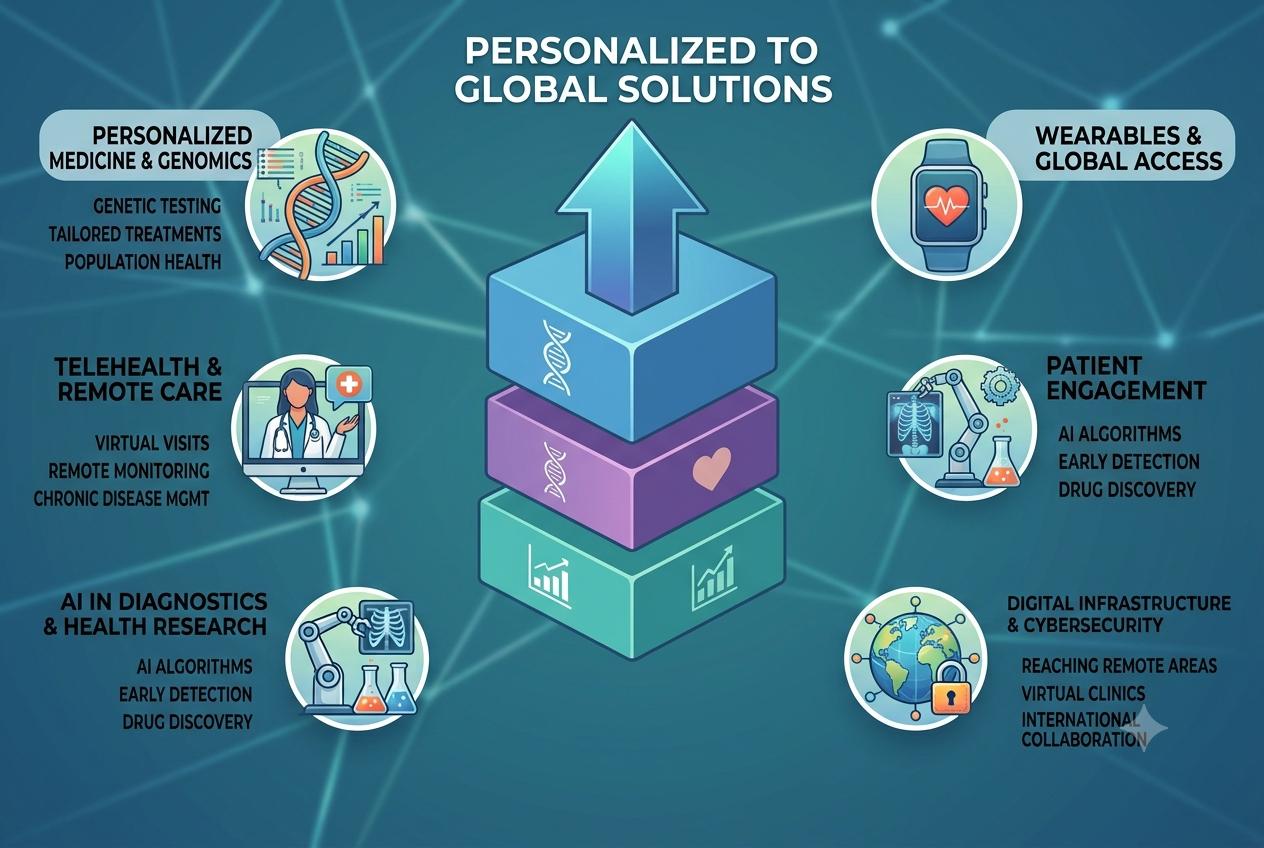
But with this transformation comes a lot of questions:
- Is my medical information safe?
- Will digital healthcare replace doctors?
- What if I'm not good with technology?
- Can digital healthcare really improve my treatment?
If you've ever thought about these questions, you're not alone. This guide explains digital healthcare in simple terms, addresses common concerns, and helps you understand how technology is making healthcare more accessible, efficient, and patient-centered.
What Is Digital Healthcare?
Digital healthcare is the use of technology to improve how healthcare is delivered, managed, and experienced.
Instead of relying solely on paper records, manual appointments, and in-person communication, digital healthcare connects patients, healthcare providers, and medical information through secure digital systems. It includes:
- Electronic Health Records (EHRs)
- Online appointment scheduling
- Telemedicine and virtual consultations
- Digital prescriptions
- Patient portals
- Health monitoring through wearable devices
- Mobile health apps
- Secure sharing of medical records
The goal isn't to replace doctors — it's to make healthcare faster, safer, and more convenient for everyone.
Why Traditional Healthcare Can Be Challenging
Many healthcare facilities still rely on manual processes, which can lead to delays and frustration. Common challenges include:
- Long waiting times
- Lost or misplaced medical records
- Repeating your medical history at every visit
- Difficulty accessing specialists
- Paper prescriptions that are hard to read
- Delayed test results
- Poor communication between healthcare providers
- Limited access for people living in rural or underserved areas
These issues can affect both patient experience and the quality of care.
How Digital Healthcare Solves These Problems
Faster Access to Care
Patients can book appointments online, receive reminders, check doctor availability, and reduce waiting times — saving time for both patients and healthcare providers.
Better Medical Records
Instead of storing information in paper files, healthcare providers use secure Electronic Health Records (EHRs). This means medical history is stored securely, previous diagnoses are easily available, and allergies and medications are recorded accurately. Patients no longer need to carry stacks of medical documents to every appointment.
Easier Communication
Digital healthcare improves communication through secure patient portals, online messaging, digital reports, appointment notifications, and prescription updates, so patients stay informed throughout their healthcare journey.
Improved Care Coordination
When healthcare providers have access to complete patient information, they can work together more effectively. This reduces duplicate tests, conflicting medications, miscommunication, and treatment delays — resulting in safer, more coordinated care.
Remote Healthcare
Not every health concern requires a hospital visit. Telemedicine allows patients to consult doctors remotely, receive follow-up care, discuss test results, and get medical advice from home. This is especially helpful for elderly patients, rural communities, busy professionals, and people with mobility challenges.
Choosing the Right Digital Healthcare Solution
Adopting digital healthcare starts with choosing the right technology, and one of the most important decisions is selecting an Electronic Health Record (EHR) system. With so many options available, it's easy to feel overwhelmed by technical features, pricing models, and vendor promises.
Instead of focusing on long feature lists, look for an EHR that is secure, easy to use, scalable, interoperable, and designed to support both healthcare providers and patients.
Conclusion
Healthcare should be simple, accessible, and focused on people — not paperwork.
Digital healthcare bridges the gap between patients and providers by making medical information easier to access, improving communication, reducing administrative burdens, and supporting better clinical decisions. While technology cannot replace the compassion and expertise of healthcare professionals, it can empower them to deliver safer, faster, and more coordinated care.
As digital tools continue to evolve, patients can expect greater convenience, improved transparency, and better health outcomes. Embracing digital healthcare today means building a healthier, more connected tomorrow.
Want to learn more about how Ciyex is helping healthcare organizations go digital? Schedule an appointment with our team to learn more about how we can support your digital health journey.