Why Small Clinics Need an EHR System

Small clinics are the backbone of healthcare in many communities. They provide personalized care, build long-term relationships with patients, and often serve areas where access to healthcare is limited. Yet, many of these clinics still rely on paper records, manual appointment books, and disconnected systems to manage daily operations.
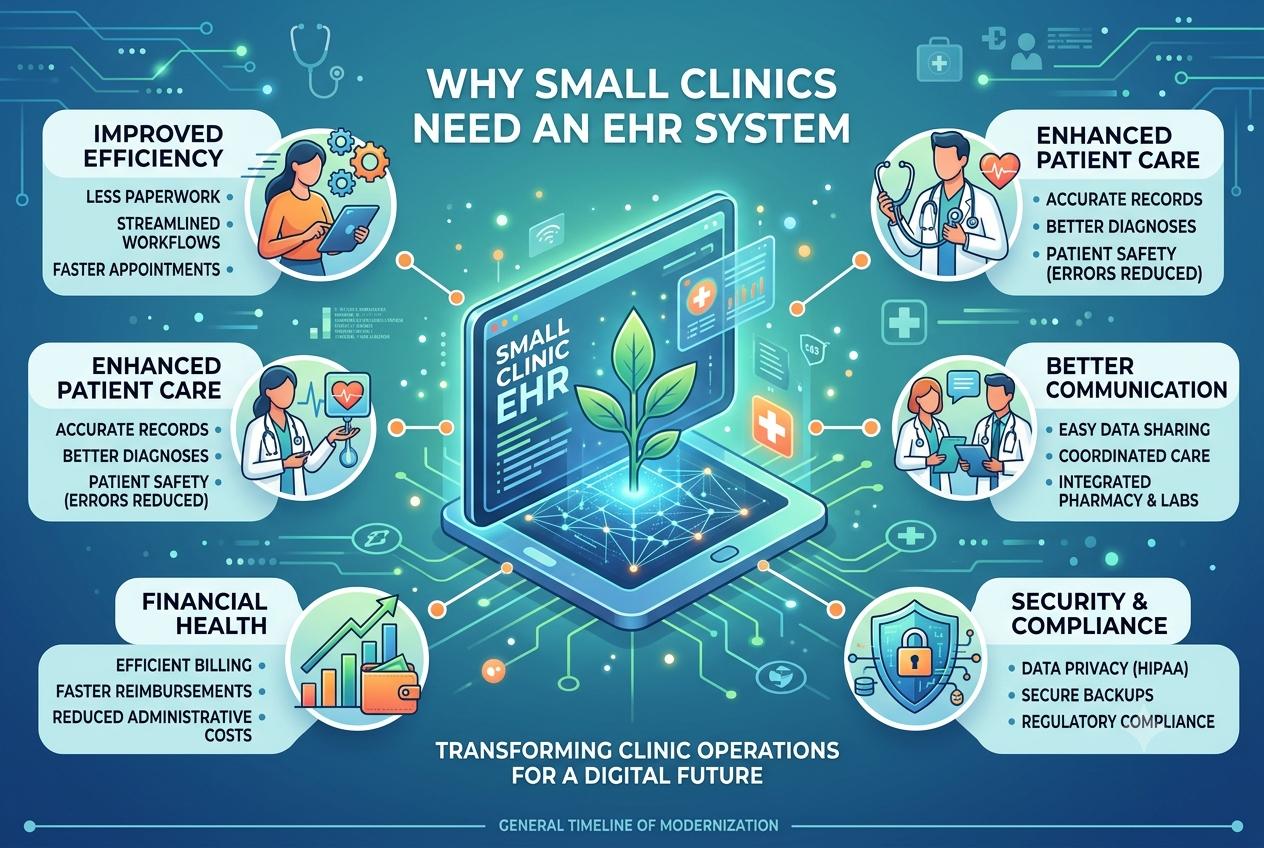
In this guide, we'll explore why small clinics need an EHR system, the problems it solves, and how it helps healthcare providers deliver better patient care while improving day-to-day operations.
What Is an EHR System?
An Electronic Health Record (EHR) is a secure digital version of a patient's medical history. It stores important healthcare information in one place, making it easier for authorized healthcare professionals to access and update records whenever needed.
A modern EHR system can include:
- Patient demographics
- Medical history
- Diagnoses
- Allergies
- Medications
- Lab reports
- Imaging results
- Clinical notes
- Vaccination records
- Appointment history
- Billing information
Instead of searching through paper files, healthcare providers can quickly retrieve accurate patient information with just a few clicks.
The Everyday Challenges Small Clinics Face
Running a small clinic isn't just about treating patients — it's about balancing quality care with limited time, staff, and resources. Many clinics struggle with:
- Managing paper records
- Long patient waiting times
- Missed appointments
- Duplicate documentation
- Lost or damaged files
- Billing errors
- Difficulty tracking patient history
- Limited staff handling multiple responsibilities
- Poor communication between departments
- Increasing administrative workload
Over time, these challenges can reduce efficiency, increase costs, and impact the overall patient experience.
How an EHR System Solves These Problems
1. Faster Access to Patient Information
Searching through paper files takes valuable time. With an EHR, healthcare providers can instantly access medical history, previous visits, allergies, medications, test results, and treatment plans — allowing clinicians to make informed decisions more quickly and spend more time with patients.
2. Better Patient Care
When complete patient information is available in one place, healthcare providers gain a clearer understanding of a patient's health. This leads to more accurate diagnoses, better treatment planning, improved follow-up care, and personalized healthcare decisions.
3. Reduced Paperwork
An EHR system digitizes patient information, reducing filing cabinets, paper forms, manual documentation, and record retrieval time, so healthcare staff can focus on patients instead of paperwork.
4. Improved Appointment Management
Missed appointments can affect both patient care and clinic revenue. Many EHR systems help clinics with online appointment scheduling, automated reminders, easy rescheduling, and calendar management — improving patient attendance and creating a smoother scheduling process.
5. Fewer Medical Errors
Errors often occur when information is incomplete or difficult to read. Digital records help reduce risks associated with illegible handwriting, missing patient information, duplicate records, and incorrect medication history, supporting safer clinical decisions.
6. Better Communication
Healthcare often involves collaboration between doctors, nurses, laboratory staff, and administrative teams. An EHR enables everyone involved in patient care to access the same up-to-date information, improving communication and reducing misunderstandings.
7. Easier Billing and Documentation
Manual billing processes increase the likelihood of delays and errors. Many EHR systems simplify administrative tasks by supporting accurate documentation, faster billing workflows, and better claim preparation, helping clinics maintain smoother financial operations.
8. Stronger Data Security
Modern EHR systems protect patient information using secure user authentication, role-based access controls, data encryption, audit logs, and regular backups — helping clinics protect sensitive health information while maintaining patient trust.
9. Supports Clinic Growth
As a clinic grows, managing more patients with paper records becomes increasingly difficult. An EHR system scales with the clinic by helping providers manage larger patient volumes, organize records efficiently, support multiple healthcare providers, and improve operational workflows.
Signs Your Clinic Is Ready for an EHR
Your clinic may benefit from an EHR system if you frequently experience:
- Difficulty locating patient records
- Long patient wait times
- Increasing paperwork
- Missed appointments
- Billing delays
- Duplicate documentation
- Growing patient volumes
- Challenges coordinating care among providers
If several of these issues sound familiar, it may be time to consider transitioning to a digital healthcare system.
The Future of Small Clinics Is Digital
Healthcare continues to evolve, and patients increasingly expect convenient, connected, and efficient care. Digital tools like EHR systems help small clinics deliver higher-quality care, improve operational efficiency, enhance patient experiences, reduce administrative workload, and support long-term growth.
Adopting an EHR is not just about replacing paper records — it's about building a stronger foundation for better healthcare.
Conclusion
Small clinics play a vital role in delivering accessible and personalized healthcare, but relying on manual processes can create unnecessary challenges for both providers and patients. An Electronic Health Record (EHR) system helps streamline everyday operations, improve clinical decision-making, enhance patient safety, and reduce administrative burdens.
Ready to bring your small clinic online? Schedule an appointment with our team to learn more about how Ciyex can support your digital health journey.